2025 Road Safety Essay Contest Winners
2025 Road Safety Essay Contest Winners
1st Place - Jaleeyah Knight
Student At: Miami Central Senior HS
The Hidden Dangers of Distracted Driving
Introduction
Picture this you are driving home after a long day, music playing softly, and your phone buzzing with a new message. You think it will only take a second. You glance down, type a quick reply, and in that moment—just a few seconds—everything can change. That is the reality of distracted driving. It does not announce itself like drunk driving, and it does not feel as obvious as speeding. But it is just as deadly. Distracted driving is not just a bad habit—it is a decision that can destroy lives in the blink of an eye.
The Everyday Risk
One reason distracted driving is so dangerous is because it feels harmless. We convince ourselves we can multitask, that we are “good at it,” or that checking a notification takes less time than it really does. But here is the truth: looking away from the road for five seconds while traveling at 55 miles per hour is like driving the length of a football field blindfolded. Would anyone willingly close their eyes while speeding down the highway? Of course not. Yet, every day, drivers of all ages take that exact risk. It is not just numbers on a report—these are fathers, mothers, children, and friends whose lives end because someone thought one text or one scroll was worth it.
A Silent Twin of Drunk Driving
When society first began confronting drunk driving decades ago, many brushed it off as a minor issue. It took years of heartbreaking stories, strict laws, and public campaigns to make people understand just how reckless it was. Distracted driving is the new silent twin of drunk driving. Both strips away a driver’s ability to pay attention, to react, and to keep others safe. In fact, studies show that texting behind the wheel can impair your reaction time as much as being over the legal alcohol limit. If we would not accept a drunk driver putting lives at risk, why do we so easily accept distracted drivers?
Technology: The Double-Edged Sword
The irony is hard to miss—technology is both the problem and the solution. Phones are the number one source of distraction, yet many of them now have tools designed to keep us safe. Features like “Do Not Disturb While Driving” can silence notifications, and newer cars are being equipped with systems that alert drivers when they drift out of their lane or approach another car too quickly. But here is the catch: no technology can replace human choice. The safest feature in the world will not work if someone ignores it. Responsibility still begins with each of us making the conscious choice to put the phone away when we drive.
A Culture Shift Starts with Us
Changing distracted driving habits is not about passing more laws; it is about changing how we see the act itself. Years ago, wearing a seat belt was not taken seriously until campaigns, families, and communities came together to make it second nature. Distracted driving needs the same shift. Parents can set the tone by refusing to text at the wheel, showing their children that safety matters more than convenience. Teens can speak up when their friends pick up a phone while driving. Employers can encourage safe driving policies. And powerful stories—from survivors and families who have lost loved ones—can break through in ways statistics never can. These personal connections remind us that behind every crash is a life that deserves more time.
Conclusion
Distracted driving is not just about accidents—it is about choices. A text can wait. A song change can wait. A notification can wait. But a human life cannot. Every time we drive, we hold not only our own future but also the futures of everyone sharing the road. The choice is simple but powerful: focus on driving, or risk becoming the reason someone never makes it home. If we can change our mindset, take responsibility, and encourage others to do the same, distracted driving does not have to keep claiming lives. Safer roads begin with each of us choosing to look up, stay present, and drive like lives depend on it—because they do.
2nd Place - Arham Hossain
Student At: Atlantic Community HS
Roads connect Florida students to school, work, and families every single day, but the same roads can be deadly when people make careless mistakes and choices. Teen drivers and passengers are especially vulnerable because they are still learning how to recognize and avoid danger. Every decision made behind the wheel or at a crosswalk, whether to look at a phone, buckle a seat belt, or slow down. This situation can mean the difference between life and death. Because of this, every Florida student has a responsibility to help create safe and respectful behavior in and around vehicles. By rejecting distracted and impaired driving, obeying speed limits, always wearing seat belts, being cautious, and protecting pedestrians and bicyclists, young people can prevent tragedies before they happen. Distracted driving is one of the most common and dangerous habits among teenagers. Instead of focusing on the road, many young drivers look at text messages, scroll through social media, change playlists, or talk with multiple passengers. Even for a few seconds of looking away can cause a driver to drift into another lane, run a red light, or fail to stop in time for a turning car or a crossing pedestrian. For example, I was watching a youtube video awhile ago about this lady who was using her phone while driving and ended up driving off the road into a ditch. When a crash happens because of a notification that could have waited, the result can be minor to permanent injuries that may be life threatening, destroyed vehicles, or even the loss of a family member, friend, or you. To prevent this, students must make a personal rule to silence their phones, use “Do Not Disturb” features, and refuse to ride with drivers who will not put their devices away. Impaired driving is just as dangerous and often even more deadly. When someone drives after drinking alcohol or using drugs, their reaction time is slower, their vision is blurry, and their judgement becomes weaker. Teen drivers already have limited experience, so adding impairment makes it much harder to stay in control of the car, especially at night or in bad weather. One small decision to drive after a party can lead to handcuffs, court dates, lifelong guilt, or the death of an innocent person on the road. Florida students can protect themselves and others by agreeing never to drive impaired, never to get in a car with an impaired driver, and always to find safer options like calling a parent, guardian, or ride service. Speeding and aggressive driving also pay a major role in serious crashes. When a driver speeds, follows too closely, or weaves in and out of lanes, there is less time to react to sudden changes such as a child running into the street or a car braking ahead. Higher speeds also make collisions more violent, causing more severe injuries and greater damage. Many teens feel pressure to “show off” by racing or speeding with friends in the car, but these moments of excitement are not worth the risk of permanent injury or death. Choosing to leave home earlier, follow posted speed limits, and remain calm instead of aggressive allows everyone to arrive safely, including the driver, the passengers, and the people in other vehicles. Seat belt compliance is one of the simplest but most powerful ways to stay safe. Seat belts keep people from being thrown around inside a car or ejected during a crash, which greatly reduces the chance of serious injury. Yet some passengers still refuse to buckle up because they are “just going down the street” or because they think seat belts are uncomfortable. Crashes can happen on short trips at low speeds, and a loose passenger can harm others in the car as well as themselves. A truly responsible driver never starts the engine until every person is bucked, and a responsible passenger always buckles up without being asked. Making seat belts use a small habit with life-saving results. Aggressive driving goes beyond speeding and includes behaviors like tailgating, cutting other drivers off, swerving, yelling, or using your motor vehicle to intimidate and scare others. These actions increase stress on the road and can quickly escalate into road rage incidents. For teen drivers, who may already feel nervous or emotional, aggressive behavior makes it much harder to think clearly and make safe choices. Instead of feeding anger, students can choose to let others merge, keep a safe following distance, and avoid eye contact or arguments with hostile drivers. Respectful, patient driving sends a message that safety matters more than pride or winning a momentary battle over a lane. In conclusion, road safety for Florida students is not just about one behavior or one rule, it is about a whole mindset of responsibility, respect, and understanding. Distracted driving, impaired driving, speeding, and aggressive behavior all create preventable tragedies. When teens choose to put their phones away, stay sober, buckle up, slow down, and watch for vulnerable road users, they protect their friends, families, and communities. Every safe choice may go unnoticed, but every unsafe choice risks changing lives forever. By committing today to safer habits on and around the road, Florida students can lead the way toward fewer crashes and a safer future for everyone.
3rd Place - Giancarlos Amador
Student At: Southwest Miami Senior HS
Impaired driving refers to the act of someone operating a vehicle under the influence of alcohol or drugs, that affect your ability to drive safely. When a driver is impaired, they tend to have slower reaction times, decreased coordination, impaired judgment and concentration, and increased sleepiness and vision problems that can increase the likelihood of getting into an accident.
People should never drive while being impaired because it puts your life and the life of others at risk. Every year, thousands of people are injured and killed due to crashes caused by an individual that was driving while being impaired. Although these tragedies can be prevented, many people decide not to put any thought into this relevant problem. While the simplest method is resisting consuming a substance that can leave you impaired, many can't even commit to this responsibility. Driving under the influence of a substance is not about avoiding accidents, but you could also face legal consequences such as fines, criminal records, or jail time.
Following traffic and road safety rules is crucial for avoiding risking your personal safety and the safety of others on the road. These laws were made in order to ensure that all road users can travel safely and predictably. When drivers follow these rules, like following speed limits and traffic signals, they contribute to safety on the road. Staying sober is also something people should be aware of before getting behind the wheel as you can also face legal action.
In essence, impaired driving is a dangerous and irresponsible act that endangers the people on the road, not only the drivers but everyone around them. By choosing not to consume these substances and get behind the wheel, it can help create safer roads for us and others. Therefore, everyone plays a role in road safety, and it starts with making responsible decisions and choices that won't harm others every time we drive.
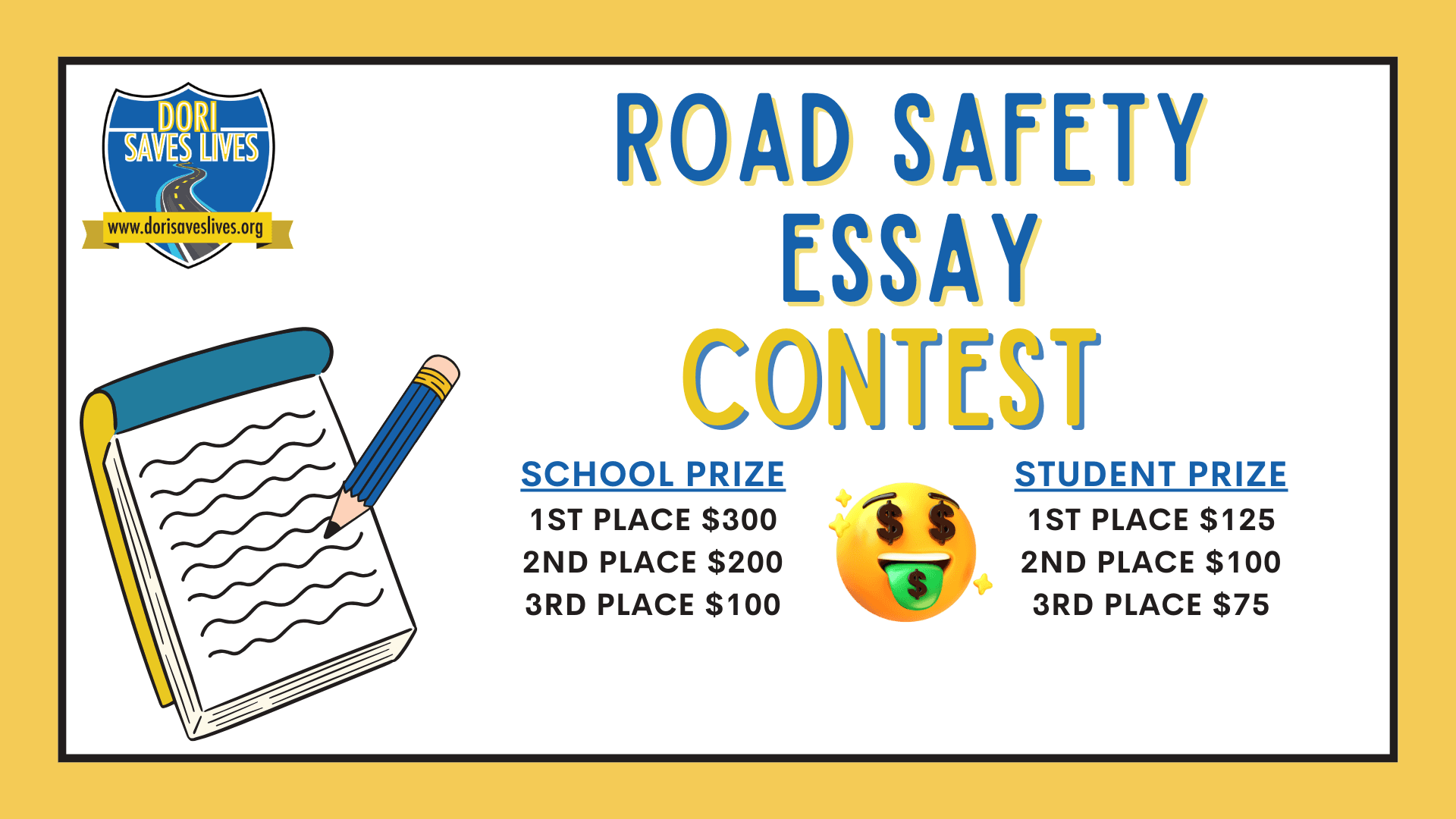
$300, $200, and $100.00 will be awarded to a Florida students’ school.
$125, $100, $75 will be awarded to a Florida student.
ALL PARTICIPANTS WILL EARN 30 COMMUNITY SERVICE HOURS!
The 2025 Road Safety Essay Contest Is Co-Sponsored By: